
How Lovable Grew to $500M ARR With Creators
Lovable, the AI app builder, became one of the fastest-growing software companies ever. A widely shared breakdown of its growth reports that it reached $500 million in ARR in 19 months, while its team described paid marketing as a death trap.
That does not mean Lovable never spent money. It means it spent differently: behind people rather than platforms. This post unpacks the three layers of Lovable's creator engine and the vetting rules that kept it credible.
Key takeaways
- Lovable's growth runs on three layers: its own team telling the story, external creators multiplying reach, and paid spend placed behind people.
- Creators such as Kevin Stratvert, Krish Naik, Vaibhav Sisinty, and Marina Mogilko gave Lovable access to a combined 26.4M+ followers.
- Sponsored creator content was timed around launches. A sponsored video went live the day after Lovable 2.0 launched.
- Lovable's influencer lead regularly turned down creators with millions of followers in favor of better fit.
- Every creator was expected to use the product before being briefed, and success was measured in product metrics, not applause.
Layer 1: Why start with your own team?
Because a company full of credible voices is its own distribution channel.
Before creators came in, Lovable's team members each told the company's story from their own angle. Team members covering growth, design, go-to-market, partnerships, and building the marketing team all posted in their own voices, and the company's first "professional vibe coder" showed what the product could do.
This matters for two reasons. First, it creates a steady base of authentic content that does not depend on paid partners. Second, it gives external creators something to build on. When a creator talks about a product whose team is already visible and active, the story feels real.
For your startup: before paying any creator, ask which three or four people on your team could post regularly about what they are building and learning. That is your first distribution layer, and it is free.
Layer 2: How did creators multiply the reach?
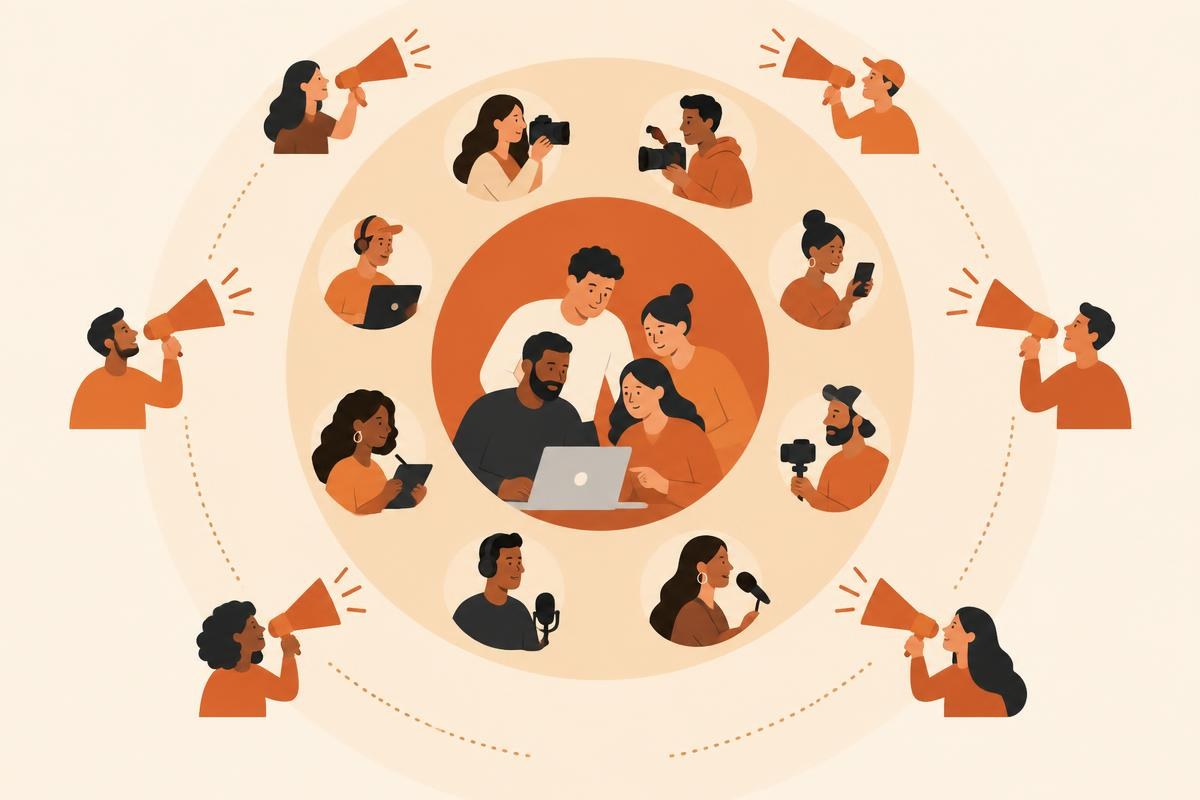
Once the team layer was running, Lovable brought in someone to run influencer marketing: Mindaugas Petrutis, one of the company's first 50 employees.
The creators who came next included Kevin Stratvert, Krish Naik, Vaibhav Sisinty, and Marina Mogilko across YouTube and Instagram. Between them, they have more than 26.4 million followers, a level of reach few founding teams could ever build on their own.
These were not random influencers. They were educators and builders whose audiences already wanted to learn how to make things with AI. That audience fit is what turns views into signups for a product-led tool.
Layer 3: How did Lovable spend on paid?
It put money behind people, and it timed that money around launches.
David Ondrej's sponsored video went live the day after Lovable 2.0 launched, catching the wave of attention while it was still building. Varun Mayya walked through five apps he built with Lovable to run his 500-person company. Lovable also hosted in-person events such as a fireside chat in San Francisco.
The pattern: launch creates the moment, creators explain it in depth the next day, and paid spend amplifies the people rather than running generic ads. We show how launch day and the days after fit together in Startup Launch Videos on X: 2026 Benchmarks.
How did Lovable decide which creators to work with?

With four questions, asked in a deliberate order. Petrutis described them in an interview with Favikon:
1. Are you a good human being? A fast-growing company attracts people chasing the opportunity rather than the product. How someone replies to a first message tells you a lot. Good partners respond to what you actually said. Others just send a rate card.
2. Will you use the product? Do not brief someone who has never touched it. Give them access and two weeks. If they come back with nothing to show, you have your answer before spending anything.
3. Can you find your own angle? Read the creator's comment sections before any call. What does their audience keep asking about? A creator who can name their own angle will make content that sounds like them, not like your brief.
4. Is there real enthusiasm? A lukewarm creator makes content that feels obligatory, and audiences notice instantly.
Petrutis regularly rejected creators with millions of followers who did not pass these tests. Size was never the deciding factor.
How did Lovable measure success?
By product metrics, not applause.
Instead of focusing on views, likes, or impressions, Lovable tracked a sequence:
- Signups attributable to a campaign window
- Activated users who reached real value in the product
- Conversions to paid
- Customer acquisition cost for the creator channel compared with others
- Whether cost per activated user improved over time
The last metric is the one that justifies a creator program rather than a single campaign. Creator content keeps working after it is published, so a program that looks expensive in its first month can look efficient by its fourth.
What can other AI startups copy?
Build the team layer first. Your founders and early team are your cheapest, most credible voices.
Recruit educators, not entertainers. For a product-led AI tool, the best creators are the ones who teach their audience how to do something.
Make every creator a user. Product access plus two weeks is the simplest quality filter there is.
Time sponsored deep dives to launches. Plan creator content for the day after a big release, when curiosity is highest.
Measure activation, not attention. Track signups, activation, and paid conversion per creator from day one.
Repeat with winners. Gamma, another fast-growing AI tool, followed a similar approach, doubling down on repeat partnerships with its top-performing creators.
Frequently asked questions
Did Lovable use paid advertising? Its team has described paid marketing as a death trap, but it did spend money, mostly behind creators and people rather than generic ads.
Which creators promoted Lovable? Creators including Kevin Stratvert, Krish Naik, Vaibhav Sisinty, Marina Mogilko, David Ondrej, and Varun Mayya.
How did Lovable choose creators? By four questions covering character, product use, a creator's own angle, and genuine enthusiasm, rather than follower count.
Build your own creator engine
UGC Scout helps AI and SaaS startups run influencer-led growth: finding creators whose audiences match your users, getting them hands-on with your product before they post, timing content around your launches, and measuring results in signups and activation. Book a free call to plan your creator program.
Sources
- StartupTalky Community, "Lovable grew to $500M ARR in 19 months but calls paid marketing a death trap," September 2026
- Favikon, "The Ultimate Guide to B2B Influencer Marketing (2026)," August 2026, including its Lovable creator program breakdown
- Kira Klaas, "How to Do B2B Influencer Marketing," On Brand, February 2026
Want this handled for you?
UGC Scout gives you real creators, 10 to 1,000 videos per month, and everything from ideas and scripts to posting. No long-term contract, cancel anytime.
Book a free callAbout the author
Dave Franco runs creator programs at UGC Scout, working with tech startups and DTC brands on creator-led growth.
Keep reading
- How Cal AI Grew on Creators Before Paid Ads
Cal AI did not buy its way to scale. It built a creator network first, added paid ads second, and affiliates last. Here is the full teardown.
- The 90-day framework for building a UGC creator engine that actually scales
A month-by-month system for going from zero to a running UGC creator roster, built around discovery, brief iteration, and cutting weak creators fast.
- Flat Fee vs Per View: How to Pay Creators
How you pay creators changes what you get from them. Here are the five pricing models startups use in 2026, and when each one wins.