
Flat Fee vs Per View: How to Pay Creators

Ask ten growth leads how they pay creators and you will hear five different answers. Some swear by flat fees. Some only pay per view. Others keep creators on retainer, pay bounties for viral posts, or split the difference with a fee plus commission.
The model you choose is not just an accounting decision. It shapes which creators say yes, what content they make, and how much upside you keep when a video takes off. This guide breaks down the five models AI and app startups use in 2026, with real examples of each.
Key takeaways
- Flat fees give you the upside of a viral hit at no extra cost. They are the standard for hero creators and retained rosters.
- Per-view pricing suits large clip networks built for raw reach, where no single clip carries the budget.
- Retainers turn creators into an always-on channel and work best once you know which formats convert.
- Bounties scale to thousands of small creators but can create quality and trust problems.
- Fee plus commission aligns creator and brand on revenue and suits creators with high-intent audiences.
What are the main ways to pay creators?
| Model | How it works | Best when |
|---|---|---|
| Flat fee | Fixed payment per video or post | You want full upside from a hero creator |
| Per view (CPM) | Pay for views delivered | Running a clip network for raw reach |
| Retainer | Monthly fee for a set volume | Building an always-on creator channel |
| Bounty | Payout scales with shares, likes, or installs | Activating very large pools of small creators |
| Fee plus commission | Fixed fee plus a share of conversions | Aligning creator and brand on revenue |
Why do many app founders insist on flat fees?

Because a flat fee turns a viral video into free distribution.
Jake Castillo, writing about the Cal AI growth playbook, calls flat rates a non-negotiable rule. If a flat-fee video goes mega-viral, you pay nothing extra. That asymmetric upside is exactly why organic creator content can outperform paid ads. In his words, the second you start paying per view, you have converted your influencer program into expensive Meta ads.
Flat fees also attract a certain kind of creator: one confident enough in their audience to take a fixed price. For a hero creator whose single video could carry a quarter's growth, flat is almost always the right structure.
Watch out for: paying a flat fee to a creator with the wrong audience. Cal AI learned this with a mukbang creator whose huge views barely converted because viewers watching someone eat for entertainment did not want to count calories. Flat fees reward you for picking well, and punish you for picking badly.
When does paying per view make sense?
When you are buying reach at scale and no individual video matters much.
Clip networks, where many accounts post short cuts of the same content, often run on a CPM basis. As one analysis of consumer app growth puts it, per-view pricing works for a clip army because no single bad clip sinks the budget. You pay for what you get, and you can scale spend up or down quickly.
The trade-off is that you give up the upside. A per-view clip that goes viral costs you more, not less. And because creators are paid for views, the incentive is to chase reach, which does not always mean reaching your buyers.
How do retainers work?
A retainer pays a creator a monthly fee for a set volume of content. It is the backbone of the always-on creator engines used by fast-growing consumer apps.
Cal AI is the best-known example, with a reported roster of 150 to 250+ creators on monthly retainers producing videos that read as their own content. That network alone reportedly carried the app to about $2 million in monthly revenue before paid ads were added. We break down that story in How Cal AI Grew on Creators Before Paid Ads.
Retainers work best after you have validated your formats. Before committing to a roster, run a short test to find the two or three video types where view spikes reliably line up with install spikes. Retaining creators to make content that does not convert just scales the waste.
What about bounty and performance programs?
Bounty programs pay creators based on results: shares, likes, installs, or signups. They can activate enormous numbers of small creators quickly.
The best-known 2026 example is Higgsfield's "Higgsfield Earn" program, which pays creators more as their posts earn more engagement. In its first 20 days, the company commissioned 10,000 creators who submitted 50,000 videos.
Bounties bring real risks. When thousands of creators are paid for engagement, quality control and disclosure become hard to manage. Forbes reported creator complaints about payouts and account issues in Higgsfield's program, and later in 2026 unlabeled AI promotions sparked a wider backlash among creators and audiences. If you run a bounty program, invest in clear rules, reliable payouts, and mandatory disclosure from day one.
Is fee plus commission the best of both worlds?
For many brands, yes. A fixed fee covers the creator's time and effort, while a commission on sales or signups rewards them for results. It aligns both sides on what actually matters: revenue.
This model works best when:
- You can track conversions reliably through codes or links
- The creator has a high-intent audience likely to buy
- You want a long-term partner rather than a single post
Some consumer app founders structure most deals this way, combining a base fee with a performance kicker.
How do you choose the right model?
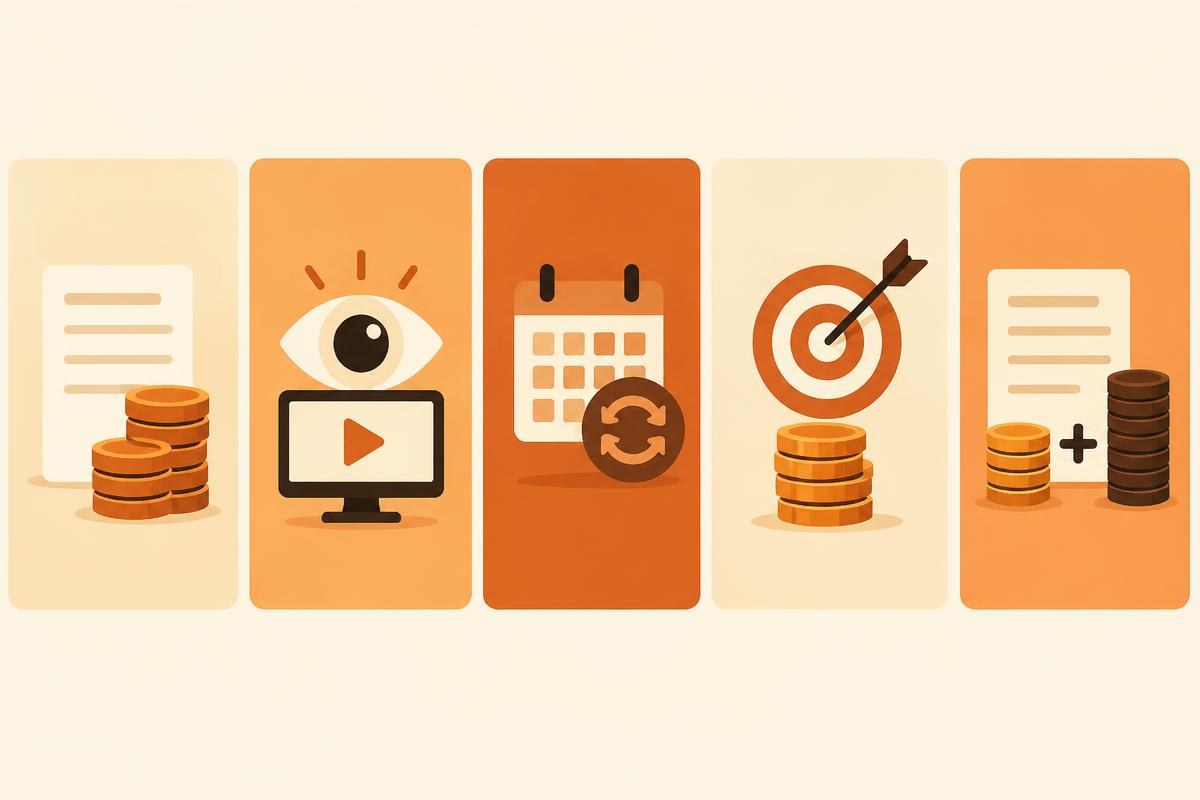
Start with your goal, then match the model.
- Launching and want a breakout moment? Flat fees with a handful of well-matched hero creators.
- Building an always-on growth channel? Retainers, after validating formats with a small test.
- Need raw reach fast, at predictable cost? Per view with a clip network.
- Want thousands of small creators? A bounty program, with strict disclosure and quality rules.
- Selling something trackable to a high-intent audience? Fee plus commission.
Most mature programs mix models. A typical setup might use flat fees for a few hero creators at launch, a retained roster for ongoing content, and affiliate commissions once the funnel is proven.
What about B2B and LinkedIn?
B2B pricing works differently. Most sponsored LinkedIn posts are priced per post, with a 2026 transacted median of $798, and brands then pay separately to amplify the best posts. We cover that market in What LinkedIn Creators Cost in 2026.
Frequently asked questions
Should I pay influencers per view or a flat fee? Flat fees are usually better for hero creators and retained rosters because viral hits cost nothing extra. Per view suits large clip networks built for reach.
What is a creator retainer? A monthly fee for a set volume of content, used to build an always-on creator channel.
Are performance-only deals a good idea? They can scale fast, but they are harder to control for quality and disclosure. Many brands prefer a base fee plus commission.
Get the structure right from day one
UGC Scout helps tech startups and app companies build creator programs that pay off: choosing the right pricing model for your goal, sourcing creators whose audiences match your users, and producing creator video at volume. Book a free call to design your program.
Sources
- Jake Castillo, "The Ultimate Guide To Build And Scale Consumer Apps," X, June 2026
- Gavel, "The Consumer App Growth Playbook: 9 Founders Who Scaled With Creators," June 2026
- ExitStack, "The UGC Playbook," August 2026
- Growthcurve, "The Complete Cal AI Growth Playbook," May 2026
- Forbes, "The Dark Side Of AI Video Startup Higgsfield's Super-Fast Growth," February 2026
- Kompozy, "AI creator sponsorship transparency (2026)," August 2026
- 44 Degrees, "The Organic Creator Engine," July 2026
- Favikon, "The Ultimate Guide to B2B Influencer Marketing (2026)," August 2026
Want this handled for you?
UGC Scout gives you real creators, 10 to 1,000 videos per month, and everything from ideas and scripts to posting. No long-term contract, cancel anytime.
Book a free callAbout the author
Dave Franco runs creator programs at UGC Scout, working with tech startups and DTC brands on creator-led growth.
Keep reading
- What LinkedIn Creators Cost in 2026
Most sponsored LinkedIn posts cost between $200 and $2,000, with a transacted median of $798. Here is what drives the price, and how to budget your first program.
- How Cal AI Grew on Creators Before Paid Ads
Cal AI did not buy its way to scale. It built a creator network first, added paid ads second, and affiliates last. Here is the full teardown.
- How to work with UGC creators: briefs, scripts and monthly volume
A step by step guide to briefing real creators, approving scripts, handling revisions and shipping products, then scaling from 10 to 1,000 videos a month.