
How Cal AI Grew on Creators Before Paid Ads

Most consumer apps launch the same way: build the product, open an ad account, and hope the cost per install works out. Cal AI, the calorie tracking app built by teenage founders Zach Yadegari and Blake Anderson, did the opposite. It built a network of creators first, let that network make the app feel everywhere, and only then turned on paid ads.
The result was one of the clearest creator-led growth stories in consumer AI. This post breaks down what Cal AI actually did, in what order, and what any AI or app startup can take from it.
Key takeaways
- Cal AI reportedly retained somewhere between 150 and 250+ creators on monthly deals, and that network alone carried the app to roughly $2 million in monthly revenue.
- Paid ads came second, once the brand already felt ubiquitous. Affiliates came last.
- Creators were chosen by audience fit, not audience size. A creator with huge views in the wrong niche barely converted.
- Cal AI paid flat fees, not per view, so a viral video cost nothing extra.
- The company reported roughly $30 million in 2025 revenue before MyFitnessPal acquired it.
What did Cal AI actually do?
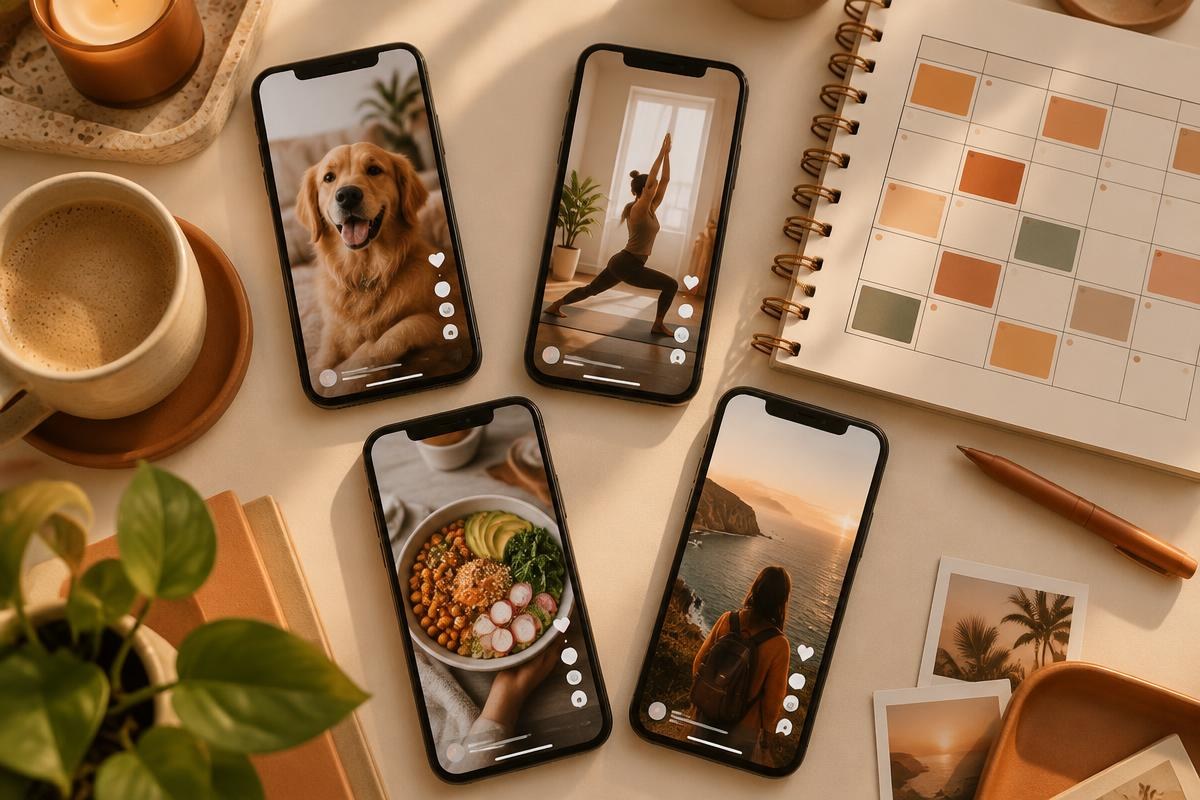
Cal AI turned creators into its primary distribution channel. Instead of running one-off sponsored posts, it kept a large roster of fitness and nutrition creators on monthly retainers, each producing videos that looked and felt like their own content rather than ads.
Reports on the exact size of the roster vary. One growth teardown describes more than 150 creators on retainer; another puts the number at more than 250. Either way, the scale is the point. This was not an influencer campaign. It was an always-on content engine.
According to Yadegari, that creator network alone took the app to about $2 million in monthly revenue before paid acquisition was layered on top. The company went on to report roughly $30 million in revenue for 2025 before MyFitnessPal acquired it.
Why did creators come before paid ads?
Because the sequence changes the economics of everything that follows.
When an app is unknown, every paid ad has to do two jobs at once: introduce the product and convince someone to install it. That is expensive. When the same person has already seen the app in five creator videos that week, the ad only has to do the second job. Familiarity lowers the cost of conversion.
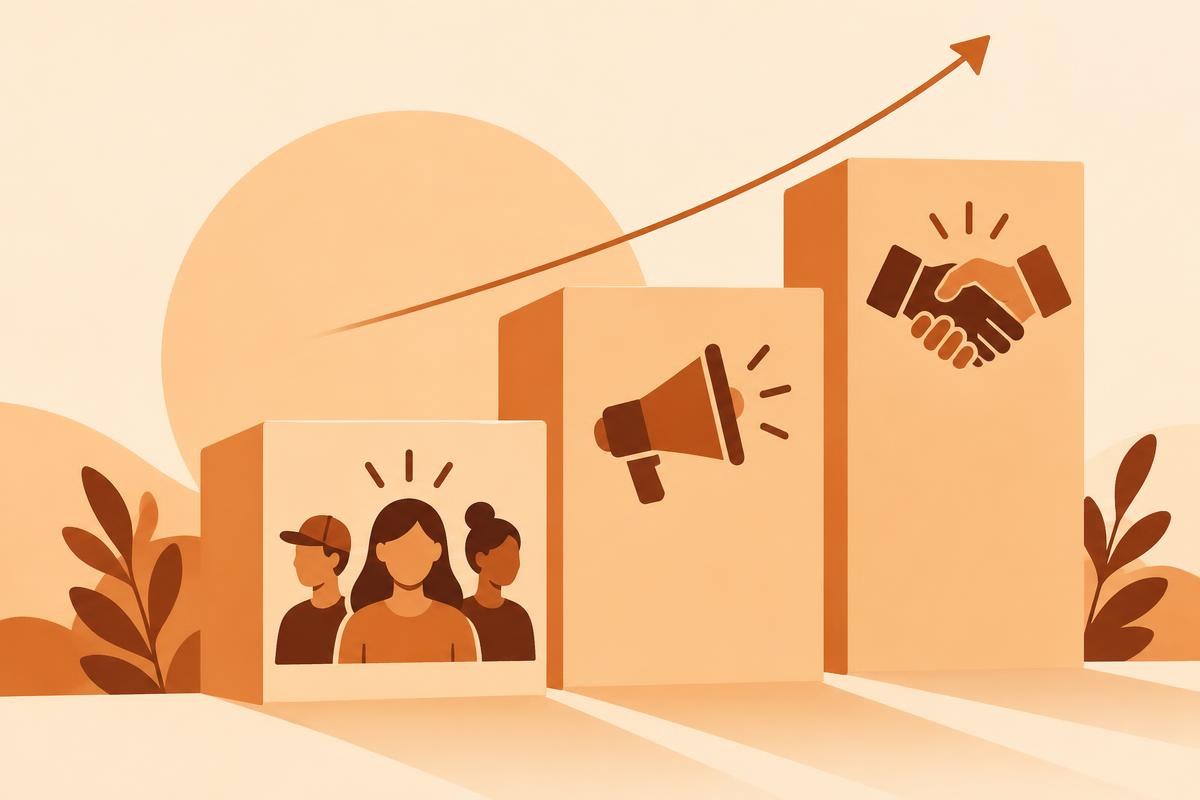
Cal AI's sequence was deliberate:
- Creators first. Build ubiquity through a large, retained creator network.
- Paid ads second. Add paid acquisition once organic reach had made the brand familiar and growth started to flatten.
- Affiliates last. Bring in performance partners only once the funnel mechanics were tight enough to pour fuel on.
As one analysis of the playbook points out, most consumer subscription apps run these in the reverse order, and that is a big reason many of them plateau early.
How did Cal AI choose creators?
By audience fit, and it learned that lesson the expensive way.
Jake Castillo, who has written about the Cal AI playbook, describes a deal with a mukbang creator. On paper it made sense: huge views, and every video featured large amounts of food. For a calorie tracking app, what could be more relevant?
It barely converted. People watching someone eat thousands of calories for entertainment are not in the mindset to count calories. The audience was large but it was the wrong audience.
The rule that came out of that experience applies far beyond calorie tracking:
- Match the viewer's intent, not the topic. A fitness creator whose audience is actively trying to change their habits beats a food creator whose audience is watching for fun.
- Look at warmth over reach. Compare average views against follower count and read the comments. A creator whose followers treat them like a friend converts harder than one broadcasting to strangers.
- Test before you scale. A small paid test with a creator costs far less than a long retainer with the wrong one.
How did Cal AI pay creators?
With flat fees, and never per view.
Castillo calls this rule non-negotiable. A flat fee means that if a video goes mega-viral, the brand pays nothing extra. That asymmetric upside is the whole reason organic creator content can beat paid ads. The moment you pay per view, he argues, you have turned your influencer program into a more expensive version of Meta ads.
There are cases where per-view pricing makes sense, such as clip networks built for raw reach. We cover that debate in detail in our guide to flat fee vs per view creator pricing. For an app building a retained creator roster, flat fees are the standard.
Is this a one-off, or a repeatable pattern?
It is a pattern. Blake Anderson's earlier apps, RizzGPT and Umax, grew the same way, and Anderson has said influencers were his most profitable channel. Umax reportedly drove more than 1 billion cumulative social impressions in about seven months and more than 7 million downloads.
The model has also created a new job. In early 2026, Polymarket hired Tobin Tang away from Wispr Flow to lead UGC full time. Running a creator engine is now a role companies compete to fill.
What should an AI startup copy from Cal AI?
Not the exact numbers. The structure.
1. Treat creators as a channel, not a campaign. One-off sponsored posts produce spikes. Retained creators produce compounding familiarity. If you can only afford a handful of creators, retain a handful rather than sponsoring dozens once.
2. Validate formats before you scale the roster. Before paying a large group of creators, find the two or three video formats where view spikes line up with install spikes. A format that earns views without installs is entertainment, not marketing.
3. Brief for native content. Cal AI's videos worked because they looked like the creator's own content. Give creators the product, the key message, and room to make it their own.
4. Sequence your spend. Earn familiarity first, then buy conversion. Paid ads layered on top of an active creator presence work harder than ads running alone.
5. Fix retention before you pour in reach. A creator engine drives people to try your product. If your product loses them in the first week, creators just help you churn users faster, in public.
When does this playbook not fit?
The Cal AI model is built for consumer and prosumer apps with a visual, demoable moment and a broad audience. It is a weak fit for B2B software sold to a small number of professional buyers. Those audiences are usually too small for organic short-form reach to matter, and they are better served by LinkedIn creators and thought leadership. We break down that side of the market in our guide to what LinkedIn creators cost in 2026.
Frequently asked questions
How many creators did Cal AI work with? Reports range from more than 150 to more than 250 creators on monthly retainers, mostly in fitness and nutrition.
Did Cal AI use paid ads? Yes, but only after its creator network had made the app widely recognized. Paid ads were layered on once organic growth began to flatten.
Should creators be paid per view? For a retained creator roster, flat fees are generally better because viral hits cost nothing extra. Per-view pricing suits large clip networks built for raw reach.
Build your own creator engine
UGC Scout helps tech startups and app companies run influencer-led growth: sourcing creators whose audiences match your users, briefing them to make content that feels like their own, and producing creator video at the volume a growth team needs. If you are planning a launch or want to build an always-on creator channel, Book a free call with our team.
Sources
- ExitStack, "The UGC Playbook: Why Consumer Tech Now Grows on Creators," August 2026
- Growthcurve, "The Complete Cal AI Growth Playbook," May 2026
- Jake Castillo, "The Ultimate Guide To Build And Scale Consumer Apps," X, June 2026
- Gavel, "The Consumer App Growth Playbook: 9 Founders Who Scaled With Creators," June 2026
- FORKOFF, "AI-UGC Playbook: UGC Video for App Growth (2026)," July 2026, citing Fortune
- 44 Degrees, "The Organic Creator Engine: A UGC Playbook for Consumer Apps (2026)," July 2026
Want this handled for you?
UGC Scout gives you real creators, 10 to 1,000 videos per month, and everything from ideas and scripts to posting. No long-term contract, cancel anytime.
Book a free callAbout the author
Dave Franco runs creator programs at UGC Scout, working with tech startups and DTC brands on creator-led growth.
Keep reading
- Flat Fee vs Per View: How to Pay Creators
How you pay creators changes what you get from them. Here are the five pricing models startups use in 2026, and when each one wins.
- What LinkedIn Creators Cost in 2026
Most sponsored LinkedIn posts cost between $200 and $2,000, with a transacted median of $798. Here is what drives the price, and how to budget your first program.
- The 90-day framework for building a UGC creator engine that actually scales
A month-by-month system for going from zero to a running UGC creator roster, built around discovery, brief iteration, and cutting weak creators fast.