
UGC video ads that convert: a practical guide
How creator videos beat studio ads, how to structure hooks and scripts, and how to test 15 to 45 second UGC ads on Meta and TikTok every month.

Key takeaways
- UGC video ads work because they look like content, not advertising.
- The first three seconds decide the result, so write the hook before the script.
- Keep videos between 15 and 45 seconds and give every video one job.
- Test several creators and several hooks per month instead of polishing one video.
- Whitelisting and Partnership Ads let you run creator videos from the creator's own handle.
A UGC video ad is a short vertical video shot by a real person who uses your product, then run as an ad or posted organically. It converts because it looks like the content people already watch, not like a commercial they scroll past.
What is a UGC video ad?
It is a 15 to 45 second vertical video filmed on a phone by a creator, showing your product in a real setting and speaking to one specific reason someone would want it. The format suits TikTok, Instagram Reels, YouTube Shorts, Meta ad placements and product listings, and the same video usually works in more than one place.
Real creators matter here. AI avatars read as synthetic within a second or two, and that breaks the one thing this format sells, which is trust from a person who seems like you. Every video UGC Scout delivers is filmed by a human creator.
Why do UGC ads beat polished studio ads?
Because attention on short-form platforms is earned by looking native, not expensive. A studio ad announces itself as an ad, so the viewer applies advertising scepticism from frame one. A creator video earns a few extra seconds, and those seconds are where the product actually gets explained.
- It is cheaper per asset, so you can afford to test many angles instead of one.
- It is faster to produce, so you can react to what is working this month.
- It carries a real voice, which is far more persuasive than a voiceover.
- It works organically and paid, so one shoot serves both channels.
How do you structure a hook and a script?
Write the hook first, then write backwards from it. A hook is the first three seconds: a problem, a surprising claim, a result, or a question the viewer wants answered. If the hook is weak, the rest of the video is never seen, no matter how good it is.
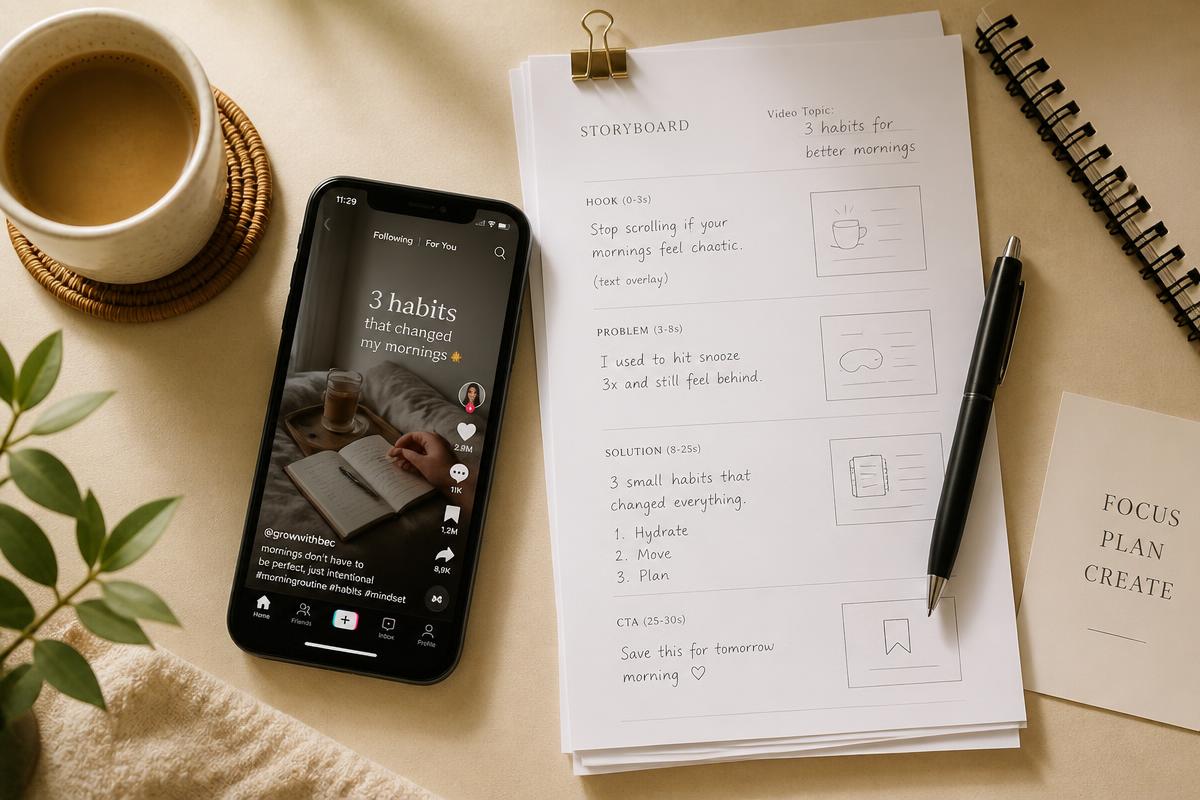
The four beats that fit in 30 seconds
- Hook, 0 to 3 seconds: name the problem or the result out loud.
- Problem, 3 to 8 seconds: make it specific and recognisable.
- Proof, 8 to 25 seconds: show the product doing the thing, on camera.
- Call to action, last 5 seconds: one clear next step, spoken and on screen.
Give each video one job. A video that tries to explain pricing, features, delivery and social proof at once converts worse than four videos that each do one of those.
How long should a UGC video be?
15 to 45 seconds. Under 15 seconds there is rarely room for proof, and past 45 seconds retention drops off sharply for cold audiences. If your product needs more explaining, split it into a sequence of short videos rather than one long one.
How do you test UGC ads on Meta and TikTok?
Test creators and hooks, not edits. Run several different creators against the same offer in the same month, each with a different hook, and let spend move to whatever holds attention. Then re-cut the winners with new hooks the following month, because creative fatigue is a matter of weeks, not quarters.
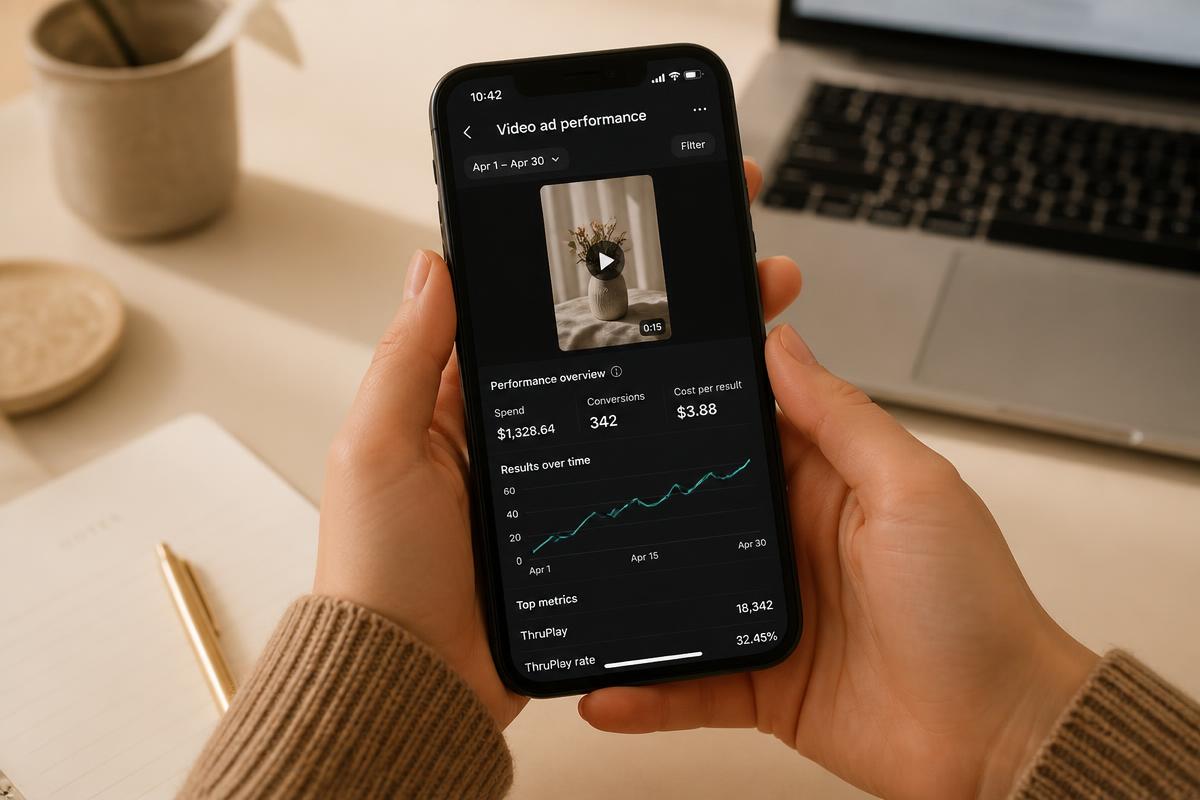
- Keep the offer and audience steady while you compare creatives.
- Look at three second and full view rates before you judge conversions.
- Retire a creative when cost per result drifts, not when you get bored of it.
- Feed winning hooks back into next month's briefs.
If your whole reason for making videos is paid testing, our Meta video ads page explains how the monthly testing cycle runs with a different creator on every video.
What are whitelisting and Partnership Ads?
Both let you run a creator's video from the creator's own account instead of your brand page, so the ad carries the creator's handle and social proof. Meta calls this a Partnership Ad, and TikTok has an equivalent authorisation flow. It usually lifts trust on cold traffic because the ad does not look like it came from the brand.
Availability depends on the creator's permission and the platform's own rules. We arrange this where it is available, and the Partnership Ads page covers what you control and what we handle.
Should you post on the brand or creator account?
- Brand account: builds your own audience and your own content library over time.
- Creator account: borrows the creator's audience and reads as a genuine recommendation.
- Both: the usual choice, since the same video can run in each place.
Posting on a creator's account always depends on that creator agreeing and on platform permissions, so treat it as an option rather than a guarantee.
Do you own the videos?
With UGC Scout, once you purchase the content you have full ownership rights. You can run it as ads, put it on your website, use it on marketplaces and product listings, and keep using it after the month it was made. That matters, because a video library compounds in value while a rented one does not.
What does a monthly cadence look like?
The teams that get results treat video as a monthly flow, not a project. Ideas and briefs at the start of the month, filming and reviews through it, posting and reporting at the end, then the next set of hooks informed by what worked. Volume can sit anywhere from 10 to 1,000 videos per month, and you can scale up or down without a long-term contract.
You can see the format in practice on our sample videos page, or book a free call and we will map a monthly plan to your volume.
Want this handled for you?
UGC Scout gives you real creators, 10 to 1,000 videos per month, and everything from ideas and scripts to posting. No long-term contract, cancel anytime.
Book a free callAbout the author
Dave Franco runs creator programs at UGC Scout, working with tech startups and DTC brands on creator-led growth.
Keep reading
- How SaaS companies running Meta ads can build a continuous creative pipeline in 2026
A practical framework for SaaS teams spending on Meta ads to build a weekly creative pipeline, hit 2026 creative diversity benchmarks, and stop losing performance to fatigue.
- How to work with UGC creators: briefs, scripts and monthly volume
A step by step guide to briefing real creators, approving scripts, handling revisions and shipping products, then scaling from 10 to 1,000 videos a month.
- Startup Launch Videos on X: 2026 Benchmarks
The median startup launch on X gets about 28,000 views. Only 7.9% reach a million. Here are the 2026 benchmarks, and what separates the outliers.